Cold Hands, Warm Heart, Cold Mug: What Actually Happens When You Drink from Copper

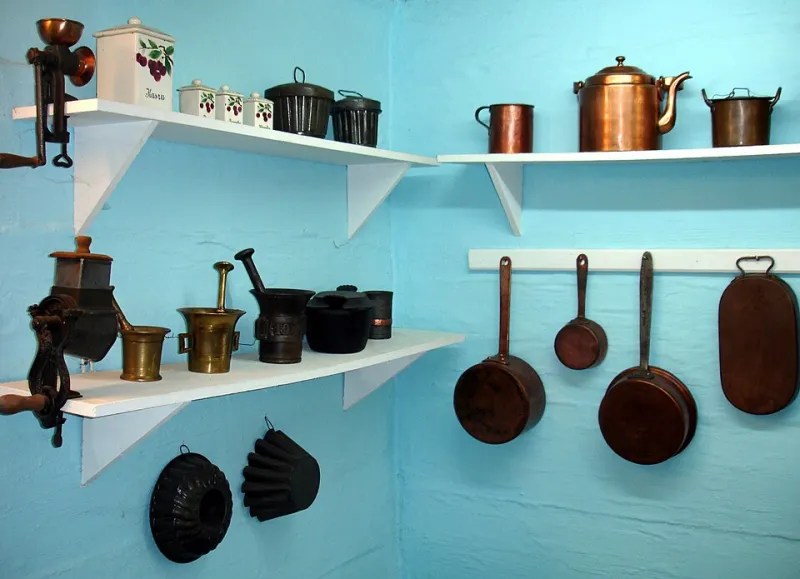
Photo: Лапоть, CC0, via Wikimedia Commons
Every workshop has its soundtrack. Mine is the tap-tap-tap of a hammer against sheet copper, and most afternoons, it's punctuated by a customer asking the same question: "So do these things actually make your drink taste better, or is that just a sales pitch?"
Fair question. And the honest answer is more interesting than either "yes" or "no."
The Physics of the Frost
Copper is a thermal show-off. It conducts heat roughly 30 times better than stainless steel and thousands of times better than glass or ceramic. When you pour something cold into a copper mug, the walls of that mug become part of the drink — pulling heat out of the beverage and off your hand almost instantly.
That's why a mule in copper tastes crisper than the same drink in a rocks glass. The mug keeps the cocktail at a lower temperature longer, and cold suppresses sweetness while sharpening the ginger bite and lime acidity. Same recipe, different experience. The metal isn't adding flavor — it's changing the temperature, and temperature changes flavor.
There's also a subtle metallic note some drinkers pick up on, especially in unlined mugs holding acidic drinks. Whether you love it or hate it depends on your palate. My grandmother swore copper water tasted "cleaner." Science says trace copper ions do leach into liquids in tiny amounts. Romance says the mug is doing something. Both can be true.
The Moscow Mule Origin Story (It's a Marketing Tale)
Here's a fun one for your next dinner party: the Moscow Mule wasn't born in a Russian tavern. It was reportedly invented in 1941 at the Cock 'n' Bull pub in Los Angeles, when a vodka salesman and a ginger beer distributor — both stuck with product nobody wanted — decided to combine forces. The copper mug? Possibly a third salesman's attempt to move slow-moving stock.
American ingenuity at its finest: two dead products, one struggling bar, and a drink that's been a staple for 80 years. The mug stuck around because it worked — not because of clever marketing alone.
Lined vs. Unlined: The Part That Actually Matters
Now for the responsible bit, because I make these things and I'd rather you enjoy them safely than admire them from across the room.
Copper is reactive. Acidic beverages — citrus juice, wine, soda, tomato anything — will leach copper into your drink. A little over a short time isn't dangerous, but regular sipping of acidic drinks from bare copper isn't recommended. That's why quality mugs come with a lining:
- Nickel lining — durable, food-safe, nearly invisible. The workhorse choice.
- Tin lining — traditional, softer, will wear over years of use and can be re-tinned.
- Stainless lining — modern, tough, slightly less romance, a lot less worry.
An unlined copper mug is best reserved for water (which is fine — it's why copper water vessels have been used for millennia) or for looking gorgeous on a shelf.
Caring for Your Mug Without Losing Your Mind
Copper wants to patina. That's not damage — it's the metal aging gracefully. But if you like the shine:
- Hand wash only. Dishwashers are where copper goes to die.
- A lemon half dipped in salt will bring the glow back in thirty seconds.
- Dry immediately, or you'll get water spots that laugh at your efforts.
- Let the patina come if you want character. A mug with a lived-in finish tells a story.
So, Should You Drink from Copper?
If you enjoy cold drinks that stay cold, cocktails with a little theater, and objects that outlive the trends that made them popular — yes. Just buy lined for the boozy, citrusy stuff, keep a bar towel handy, and don't panic when the shine softens into something warmer.
That softening isn't the mug getting old. It's the mug getting yours.