No, Your Copper Pan Isn't Rusting: Seven Metal Myths I Hear at Every Craft Fair
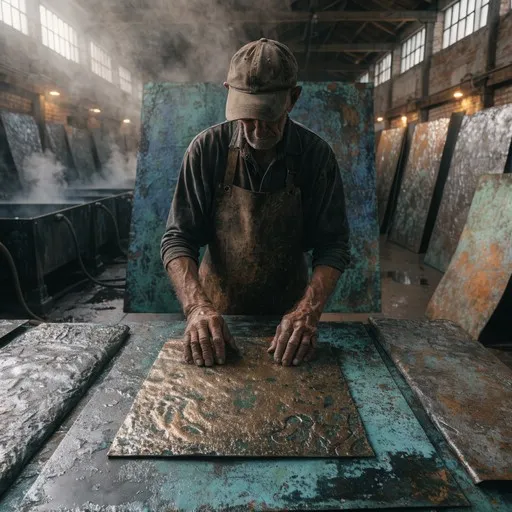
Photo: artisan coppersmith hammering copper sheet in workshop with patina examples, via images.stockcake.com
I love craft fairs. I love the questions, the skeptics, the guy who picks up a copper bowl, squints at it, and announces to his wife that it's "just painted brass." What I don't love is how many myths about copper get repeated as gospel. So let's bust a few, artisan to customer, no hard feelings.
Myth #1: "Copper rusts."
Nope. Rust is iron oxide — it requires iron, and copper doesn't have any. What copper does is oxidize: it reacts with oxygen, moisture, and time to form a layer of copper carbonate and other compounds. That's the green stuff on the Statue of Liberty. It's not decay; it's armor. That patina actually protects the metal underneath, which is why copper roofs on churches and courthouses have lasted centuries. If your copper is turning green, it's not dying. It's putting on a raincoat.
Myth #2: "Patina and tarnish are the same thing."
They're cousins, not twins. Tarnish is the early-stage dulling — browns and ambers that wipe off with a lemon and some elbow grease. Patina is the mature finish, the deep, variegated character that develops over years and that collectors pay a premium for. Tarnish is a bad hair day. Patina is gray at the temples. One you fix; the other you earn.
Myth #3: "Copper cookware is dangerous."
This one has a kernel of truth that's been stretched out of shape. Bare copper is reactive with acidic foods, which is why quality copper pans are lined with tin or stainless steel. The lining does the cooking; the copper does the conducting. A worn tin lining can be re-tinned for a fraction of the cost of a new pan. Millions of French and American kitchens have run on copper for generations without incident. The danger isn't copper — it's buying cheap, unlined, unlabeled junk from who-knows-where.
Myth #4: "Copper roofs turn green overnight."
If only. Patina on a copper roof takes years — often a decade or more depending on climate. That gorgeous verdigris you see on historic buildings in Charleston or Boston? That's decades of weather doing its slow work. If a product claims "instant patina," it's a chemical treatment, which is fine for some applications, but let's call it what it is.
Myth #5: "Copper is antibacterial, so I can skip washing it."
Copper genuinely does have antimicrobial properties — it's one of the few materials registered with the EPA for that claim, and hospitals have used copper alloy door handles for exactly this reason. But "antimicrobial" is not "self-cleaning dinnerware." Wash your mugs. Wash your bowls. The science is cool; it is not a license to be feral.
Myth #6: "Copper is too soft to be practical."
Copper is softer than steel, sure. But pure copper is rarely what you're holding — it's usually alloyed or weighted, and hammering work-hardens the metal, making it noticeably stiffer and stronger. Every piece in my shop gets planished precisely because it makes the copper tougher, not just prettier. A well-made copper piece will outlive your kitchen, your house, and possibly your heirs' interest in dusting it.
Myth #7: "Copper is just a trend."
Tell that to the Egyptians. Copper artifacts from 9,000 years ago are in museums right now. Copper has cycled through American kitchens — colonial cookware, Victorian accents, mid-century modern, the hammered-martini-shaker '70s, and today's warm-minimalist revival — and it always comes back, because warmth never goes out of style. Trends are what copper does; durability is what copper is.
The Bottom Line
Copper doesn't need defending. It's survived nine millennia, several empires, and the dishwasher. But it deserves to be understood — what it does, what it doesn't, and why that green streak on the neighbor's roof isn't a problem but a promise. If you ever catch yourself wondering whether that tarnish is trouble, ask someone who works the metal. We've heard it all, and we've got the burnished answers.