Warm It Up: Five Copper Touches That Transform a Modern Kitchen

Photo: 75Portlewes, CC BY 4.0, via Wikimedia Commons
Walk into most new American kitchens and you'll see the same palette: white quartz, gray shaker cabinets, stainless appliances. It's clean. It's safe. It's also a little bit cold — like cooking in a dental office.
Copper fixes that. No other material bounces light the same warm, rosy way, and nothing else in the kitchen actually improves with age. Stainless shows every fingerprint forever; copper develops a living patina that makes the whole room feel like it's been loved for decades. Here are the five accents I recommend most, and how to work them into whatever style of kitchen you've got.
1. Hanging Copper Pots
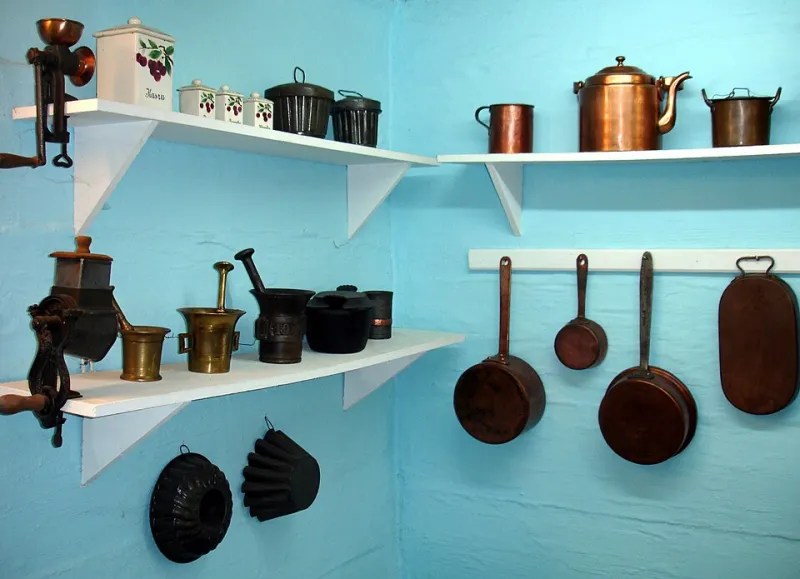
The classic move, and for good reason. A rack of copper pots suspended over an island or range turns your cookware into art and frees up cabinet space. The trick is restraint: three to five well-made pieces — a saucepan, a sauté, maybe a stockpot — hung with intention beats a cluttered wall of mismatched pans.
- Farmhouse kitchens: Pair with open wood shelving and a butcher block island.
- Industrial lofts: Let the copper play against blackened steel and exposed brick.
- Minimalist spaces: Hang just two pieces, spaced generously, against a white or deep-green wall. Copper as a single focal point is stunning.
2. A Hammered Copper Range Hood
If you make one statement, make it this one. A hand-hammered copper hood is the jewelry of the kitchen — it draws the eye up, adds texture that flat stainless can't touch, and anchors the whole room. The hammered surface also hides fingerprints and water spots better than any smooth finish, which is a genuinely practical bonus.
In farmhouse kitchens, a smooth apron-front hood in warm copper reads traditional. In modern and industrial spaces, a darker, fire-treated patina keeps it moody and architectural. Either way, it's the upgrade guests notice first.
3. Copper Sink or Bar Faucet Fittings
You don't need a full copper sink to get the effect. A copper faucet, a hammered bar sink in the island, or even copper drain fittings at a farmhouse sink bring the warmth down to working level — right where hands and water are. Copper is naturally antimicrobial, which makes it a quietly smart choice around the sink.
One styling note: copper plumbing fixtures pair beautifully with soapstone and butcher block counters, and they keep farmhouse and cottage kitchens feeling collected rather than cookie-cutter.
4. Cabinet Hardware and Backsplash Accents
Small metal, big impact. Swapping out brushed-nickel pulls for solid copper or copper-toned ones costs less than a dinner out and warms up an entire wall of cabinets. If you're feeling bolder, a copper tile backsplash — whether hammered sheet or penny-round tiles — turns the cooking zone into the warmest square footage in the house.
In minimalist kitchens, keep it to hardware only. In farmhouse and industrial spaces, mix copper with aged brass or black iron for a layered, lived-in look.
5. Countertop Pieces That Earn Their Keep
The best copper accents are the ones you actually use. A hammered copper bowl of fruit, a footed mug tree, a canister set by the stove, a copper kettle that lives on the range — these add warmth without any renovation at all. And because they're functional, the patina they develop is honest wear, not decoration.
Why Copper Ages Better Than Anything Else in the Room
Here's the part I love as someone who works the metal for a living: copper is one of the very few materials that gets more beautiful through use. Stainless stays exactly the same until it scratches, then it just looks damaged. Copper scratches, darkens, and mellows into a depth of tone that no factory finish can fake. Every mark is a meal.
And if you ever want it bright again? Lemon and salt. Five minutes. Try resetting a scratched stainless door panel — you can't.
Start with one piece. A kettle, a pot rack, a faucet. I promise the rest of the kitchen will start looking at you like it wants in.