One Ingot, Four States, and a Whole Lot of Fire: Where Your Copper Pot Really Comes From
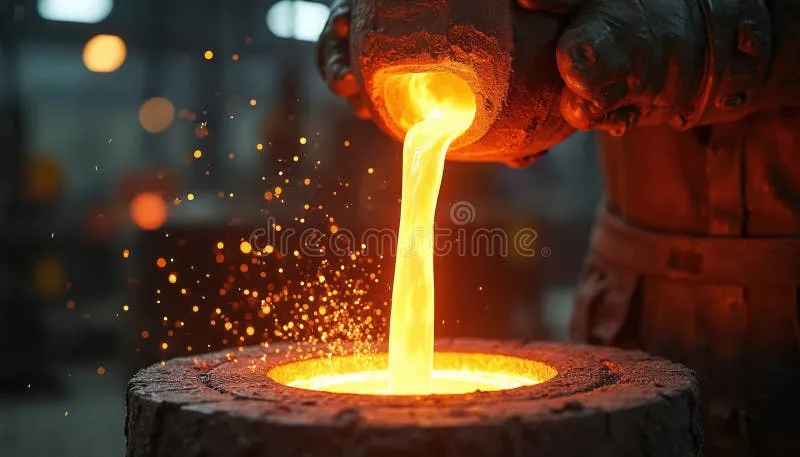
Photo: glowing copper ingot molten metal foundry, via thumbs.dreamstime.com
There's a bar of copper sitting on my bench right now, maybe eighteen inches long and heavy as a dumbbell. Before it arrived at my shop, it had already traveled farther than most people do in a decade. Before it becomes a saucepan or a set of cabinet handles, it has a story — and honestly, once you hear it, you'll never look at a copper pot the same way again.
So let's trace it. One ingot. Mine to mantel.
It Starts as Rock That Doesn't Look Like Anything
Most American copper comes out of the Southwest — Arizona and Utah especially, with big operations in places like Salt Lake City's Bingham Canyon Mine, a hole in the earth so vast astronauts can supposedly spot it. The raw ore doesn't gleam. It's gray-green rock, sometimes barely a half percent copper. That means a ton of mined stone might yield twenty pounds of usable metal.
Think about that ratio the next time you pick up a copper bowl. You're holding the concentrated effort of literal tons of earth.
Fire, Chemistry, and the First Transformation
At the smelter, the ore gets crushed to powder, floated, and roasted in furnaces hot enough to make your kitchen oven look like a candle. What comes out is called blister copper — about 99% pure, with a bumpy surface that looks exactly like its name.
Then it's refined further, often through electrolysis, where copper plates onto sheets with almost eerie purity. Finally, it's cast into the form that ends up on my bench: a thick, dense ingot. When I pull one out of the shipping crate, the first thing I do is knock on it. Good copper answers with a deep, musical ring. Cheap alloy thuds.
The Rolling Mill and the Metal's Second Childhood
Before I can form anything, that ingot gets heated and rolled — again and again — into sheet stock of the thickness a project needs. Each pass through the mill hardens the metal and refines its grain structure. This matters more than most buyers realize: well-worked copper doesn't just look good, it performs. It conducts heat evenly, resists dents better, and takes a finish that lasts.
By the time a sheet reaches my shop, the metal has been through fire, acid, electricity, and pressure. And yet — here's the part I love — it's still soft enough to shape by hand.
The Bench: Where the Story Becomes Yours
This is where I come in. I anneal the sheet over a torch until it glows dull red, then quench it and go to work with mallets, stakes, and forms. Every hammer blow I put into a piece actually reorganizes the metal's structure, making the finished spot harder and more durable than the sheet I started with.
There's no shortcut for this. A press can stamp out a thousand identical bowls in the time it takes me to raise one. But a pressed bowl and a raised bowl are not the same object. One is a product. The other is the end of a very long journey — and the beginning of another one, on your stove, on your shelf, maybe someday in your kid's kitchen.
Why the Journey Shows Up in the Price Tag
When people ask why handcrafted copper costs what it costs, I walk them through this chain: the mine, the smelter, the mill, the bench, the hours. Copper isn't a cheap raw material. Skilled labor isn't cheap. The honest answer is that a hand-raised piece represents a staggering amount of accumulated work — geological, industrial, and human.
And unlike most things you'll buy this year, it doesn't end its journey when you bring it home. Copper develops. It patinas, it polishes, it carries fingerprints and fire marks and history. That ingot from Utah still has centuries of life ahead of it.
That's what you're paying for. Not just a pot — a passport with a lot of stamps in it already.