Green Domes and Long Memories: What Courthouse Copper Knows About Building Things That Last
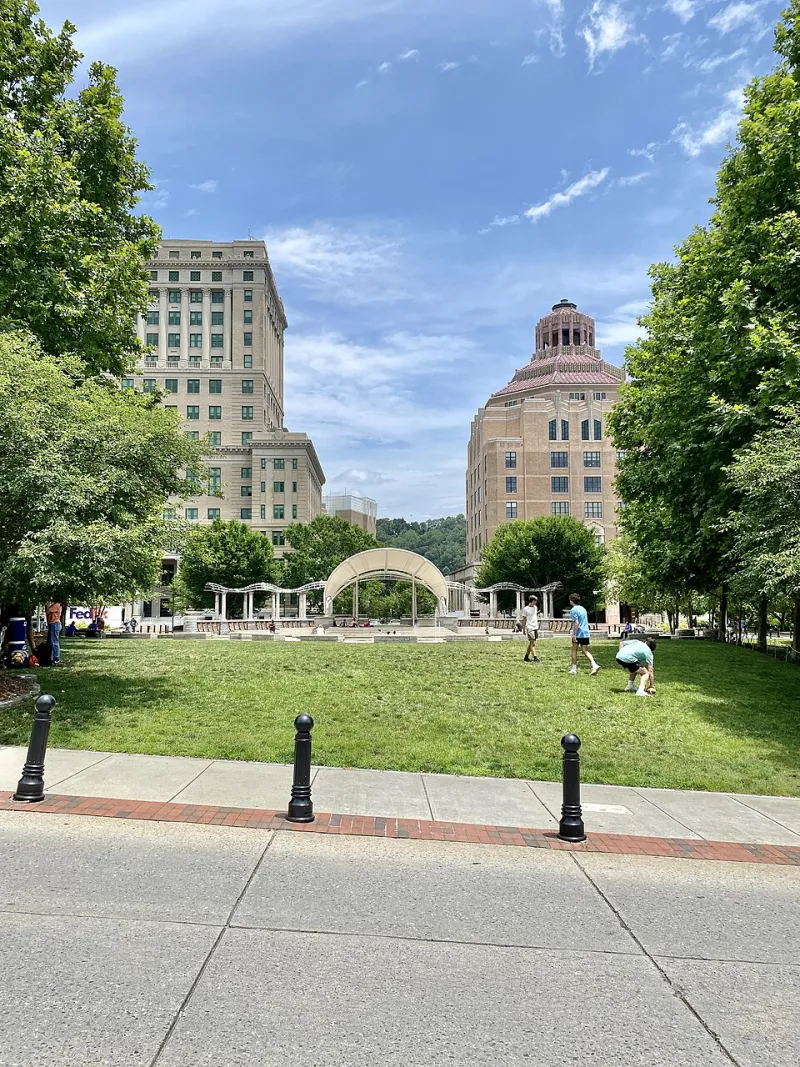
Photo: w_lemay, CC BY-SA 2.0, via Wikimedia Commons
Drive through almost any county seat in America and you'll spot it before you spot the town: a dome. Sometimes it's white paint, sometimes it's gold leaf, but often — especially in the older towns east of the Mississippi — it's that unmistakable soft green. Verdigris. Weathered copper. The same metal I hammer into pots and ladles at my bench every week, just scaled up to cover a courthouse.
We've been looking at copper our whole lives without thinking much about it. So let's think about it.
The Green Crown on the Skyline
Start with the obvious one. The Statue of Liberty is copper — about the thickness of two pennies stacked together, believe it or not — and she's been standing in New York Harbor since 1886. Her skin has thinned by almost nothing in nearly 140 years of salt air, storms, and freezes. That green patina everyone associates with her? That's not decay. That's armor. Copper oxidizes, forms a stable carbonate layer, and then essentially stops corroding. The material protects itself.
That's why architects kept specifying it. The Boston State House got its copper dome in the 1800s. County courthouses from Ohio to Indiana to Virginia wear the same green caps. Old churches, train stations, university buildings — if a structure from 1900 still has its original roof, there's a decent chance it's copper, and a decent chance that roof will outlast everyone reading this.
A Century of Service, Zero Maintenance Drama
Here's the number that gets me every time: properly installed copper roofing routinely lasts 100 years or more. Some European examples are pushing several centuries. Compare that to the asphalt shingle roof over your house, which the industry itself rates at 15 to 30 years, and you start to see the philosophical divide.
Copper doesn't ask for much. It sheds water, it resists fire, it doesn't feed mold or moss, and it can't rust the way ferrous metals do. It expands and contracts with the seasons, sure — which is why the old-timers who installed it were trained in standing seams and expansion joints — but it doesn't fail. It just quietly does its job while three generations walk beneath it.
There's a reason the trades had a saying about it: they built the roof for the building's lifetime, not the owner's.
When We Stopped Building for Permanence
So what changed? Honestly, a lot of things, and most of them made sense at the time. Postwar housing booms demanded cheap, fast materials. Asphalt got cheap. Aluminum got cheap. Labor costs rose, and copper work — which is genuinely skilled labor — became a premium product. Nobody's the villain here. But somewhere along the way, we traded 'buy it once' for 'buy it twice, and again after that.'
The courthouse dome is the last holdout of a different mindset. It says: this institution intends to be here in a hundred years, and we built accordingly. When's the last time you bought anything with that sentence attached to it?
From the Dome to the Drawer
Here's where I make the leap, and you saw it coming. The material on that dome is the same metal in the pot on your stove. Sheet copper, formed by hands, meant to outlive its buyer.
A handcrafted copper pot follows the same logic as the courthouse roof. It conducts heat beautifully. It doesn't flake or shed anything into your food. It develops a patina — darker in the kitchen, browner and warmer than the statue's green, but the same slow chemistry at work. And when you scorch it or dent it, it can be re-tinned, re-hammered, repaired. Almost nothing in a modern kitchen can say that.
I've had customers bring in pots from their grandmothers — cookware older than the shingle roof it sat under — and they need nothing more than a polish and a new handle rivet. Try that with a nonstick pan from a big-box store, which is designed, quite deliberately, to be disposable.
Buying Like a Courthouse Commissioner
You don't need to re-roof your house in copper to adopt the old mindset. You just need to ask the question those commissioners asked: will this still be here, and still working, in fifty years?
For most purchases, the honest answer is no, and that's fine — not everything needs to be an heirloom. But pick a few things. A knife. A cutting board. A pot. Something you use every day, and buy it like you're building a landmark, even a small one. Buy it for the building's lifetime, not yours.
The green dome over the courthouse didn't get that way by accident. Someone chose a material that ages into beauty instead of failure. That choice is still available to you — it's just sitting on a smaller scale, on a kitchen shelf, waiting for its next hundred years.