Anatomy of a Price Tag: What Your Handmade Copper Pot Actually Pays For
A couple of summers back, a fella at a craft market in Asheville picked up one of my copper mixing bowls, checked the price tag, and let out a low whistle. "For that money," he said, half joking, "I could buy three stockpots from the big box store."
I didn't get defensive. I handed him the bowl, told him to feel the weight of it, and asked if he had ten minutes. He did. By the end of our conversation, he understood — and honestly, most people do once someone walks them through it. So let's do that here, without the mystique and without the guilt trip.
The Raw Metal Isn't Cheap Anymore
Copper has had a rough decade on the commodities market. Between electric vehicle demand, grid upgrades, and construction booms, the price of refined copper sheet has climbed steadily. When I order sheet stock from my supplier in Pennsylvania, I'm paying several times what the same material cost when I started out.
And I don't get to buy it cheap in bulk like a factory does. I buy what I need, when I need it, in the gauges I actually use. A single 3-foot by 4-foot sheet of quality copper runs a few hundred dollars before I've cut a single circle out of it.
The Fire, the Fuel, the Failed First Try
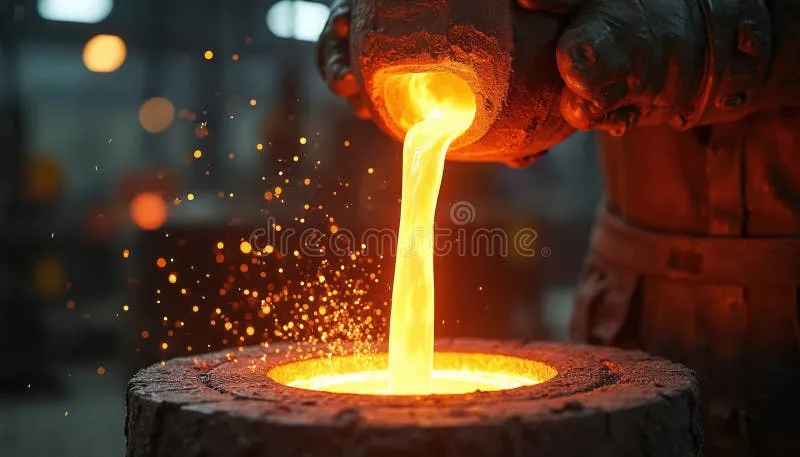
Here's the part nobody sees: annealing. To work copper by hand, you have to heat it until it glows dull cherry red, then quench it, so the metal softens enough to shape. Do that too many times and the copper gets brittle. Do it too few times and your hammer just fights you.
Every large piece — a big planter, a wine bucket, a 14-inch wok — goes through four to eight annealing cycles. Propane isn't free. Neither is the scrap pile. Roughly one in ten pieces I start doesn't make it to the shelf. A seam splits. A wall thins out where it shouldn't. That failure rate gets baked into the price of everything that does survive, because a shop that doesn't price in its failures doesn't stay a shop for long.
Let's Break Down a Real Order
A customer in Portland ordered a hand-raised copper planter last fall — 12 inches across, hammered texture, riveted handles. Here's roughly where her $610 went:
- Materials: $95 — copper sheet, rivets, bronze brazing rod
- Fuel and consumables: $40 — propane, abrasives, flux, patina chemicals
- Shop overhead: $110 — equipment wear, insurance, rent on a modest workshop, utilities
- Labor: $290 — about 16 hours of raising, planishing, fitting, and finishing at a modest artisan rate
- The rest: $75 — card fees, shipping materials, and a small cushion for the pieces that end up in the scrap bin
That labor line is the one people balk at, and I get it. But consider that a mass-produced planter might get eight minutes of total human attention on an assembly line. This one got two full working days from a person whose name is on the invoice.
Why the Waitlist, Though?
Because I can't hire a hundred of me. A one-person shop has a hard ceiling on output — maybe 150 to 200 finished pieces a year, depending on size and complexity. When demand runs ahead of that, the only honest options are a waitlist or cutting corners. I chose the waitlist. Two years sounds dramatic until you do the math: at my pace, that's just the next 150 orders standing in line.
What You're Really Buying
I won't pretend handmade copper is for everyone or every budget. Machine-made cookware is a marvel of modern manufacturing and a perfectly good choice. But when you buy a piece raised by hand, you're buying material traced to its source, hours of skilled labor, the shop's hard-won ability to fail less often, and an object built to outlive you.
The Asheville fella? He didn't buy the bowl that day. He came back six months later and bought two. He told me he'd done his own math in the meantime — dividing the price by fifty years of use instead of one. That's the calculation I'd encourage everyone to run.