Outlaw Metal: The Secret History of Copper, Moonshine, and the Shops That Refused to Die
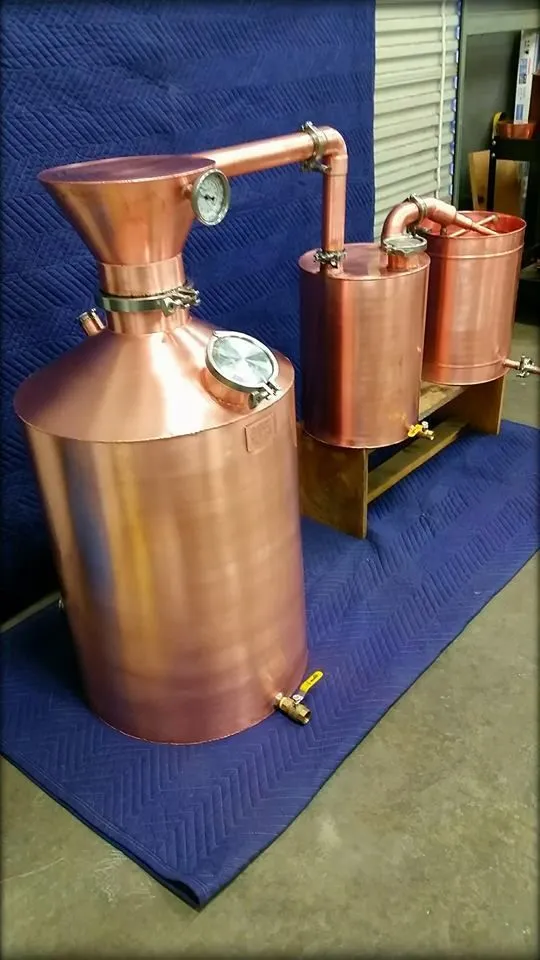
Photo: vintage copper moonshine still Appalachian workshop, via i.pinimg.com
Every time I form a seam on a copper pot in my shop, I'm aware I'm working in a trade that almost didn't make it. Not because of foreign competition or cheap machine-stamped alternatives—though those have taken their bites—but because for fourteen years, the single biggest customer of American coppersmiths was, technically, a criminal.
The story of Prohibition and copper is one most people have never heard, and it deserves telling. Because if you've ever wondered why so many old coppersmithing families in Appalachia, Kentucky, and the Carolinas have last names attached to stills as often as to skillets, well. Pull up a stool.
When the Still Was the Product
Before 1920, a coppersmith in rural America wore two hats, often in the same week. One week he'd be riveting a wash boiler or repairing a hotel kitchen's stockpots. The next, a farmer would show up at dusk needing a "whiskey worm"—the coiled condenser tube that turns vapor back into liquid spirit. Copper was the metal of choice for distilling for good reasons: it's easy to work, it conducts heat beautifully, and it chemically strips sulfur compounds from the mash, which is why bourbon aged in charred oak still tastes like bourbon and not like a chemistry experiment.
Then January 1920 arrived, and the Volstead Act made half of that business illegal overnight.
Here's the thing people miss, though: it didn't make the demand disappear. It made it go dark. A good copper still didn't lose its value—it gained it. And the smiths who knew how to build them found their order books, if anything, fuller.
The Quiet Customers
The craft during Prohibition was a study in plausible deniability. A coppersmith couldn't exactly advertise. So the work moved into coded language and wink-and-nod transactions. Orders for "boilers" and "coils for condensing maple syrup equipment" would arrive by word of mouth. Some smiths kept legitimate catalogs for cookware and farm goods, with the less catalog-friendly items discussed only in person, behind the shop door.
In the hill country of Tennessee and Kentucky, where federal revenuers were a fact of life, the smith's discretion was as valuable as his skill. A man who hammered a beautiful seam and kept his mouth shut was worth his weight in the metal itself. Some of the old-timers' pattern books that survive from that era have telling gaps—pages of ladders, tubs, and roofing flashing, and then a suspicious absence of anything resembling a condensing coil, which everyone knew the smith could build anyway.
What Almost Killed the Craft (It Wasn't the Feds)
Ironically, the repeal of Prohibition in 1933 wasn't the rescue you'd expect. By then, two forces were grinding down the small coppershops. First, industrialization: machine-drawn tubing and factory-built stills made hand-hammered work a luxury rather than a necessity. Second, the slow decline of farm-based distilling itself as production consolidated into licensed, industrial operations that bought their equipment from big fabricators, not the man down the road.
The smiths who survived did it by pivoting—hard. Some leaned into architectural copper: flashing, gutters, roofing, weathervanes. Others chased the kitchen trade, making pots and pans for restaurants and households. A few hung on making church bells, marine fittings, or repair work for factories. The craft got leaner, more generalist, more stubborn.
And that stubbornness is the part I love. The knowledge didn't vanish. It moved into kitchens and rooftops and waited.
The Lineage in Your Pot
When the artisan revival hit—first in the 1970s craft movement, then again with the farm-to-table and maker movements—those surviving shop traditions were the seed stock. Techniques for raising, planishing, and riveting copper that had been kept alive by smiths doing "ordinary" work through the lean decades became the foundation for the handcrafted cookware boom.
So when you pick up a hand-hammered copper pot today, you're holding more than a cooking vessel. You're holding a trade that survived by being useful, adaptable, and occasionally very quiet about its best customers. There's a lineage in that metal: the wash boilers and the roof flashing, the restaurant stockpots and—yes—the coils that condensed a lot of mountain whiskey in the middle of the last century.
I think about that sometimes when I'm at the bench, hammering a seam flat. Craft doesn't survive because it's romantic. It survives because enough people refuse to let the skills die, decade after decade, through boom and ban and everything between.
That's the real heritage in handmade copper. Not just beauty. Endurance—with a slightly rebellious streak running through it.