Twelve Months of Weather, One Copper Downspout: A Patina Field Notes Diary
Photo: Gérald Kergourlay, CC BY 4.0, via Wikimedia Commons
Copper roofs get all the glory, but the downspout is where the drama happens. It's the workhorse — channeling every storm, baking in the sun, collecting whatever the neighborhood air throws at it. So last spring, I bolted a raw, bright-as-a-penny copper downspout to the side of my workshop in Tennessee and did what any reasonable metalsmith would do: I checked on it every month for a year and took notes.
Here's the field diary.
Month 1–2: The Flashy Phase (Spring)
Fresh copper is loud. Salmon-pink, almost orange, with a mirror sheen that makes the whole gutter run look brand new — because it is.
Within two weeks, the first change showed up: a dulling near the mounting brackets where my fingerprints had left oils behind. Bare hands on raw copper are the fast-forward button for tarnish. By the end of month two, the sun-facing side had gone a warm honey-brown while the shaded side stayed pinker.
What it means: This is clean-air tarnish, just copper reacting with oxygen. Nothing to worry about.
Months 3–5: The Chocolate Stage (Early Summer)
Here in the South, June humidity is a force of nature. By mid-June the downspout had gone a deep chocolate brown, uneven in the best way — darker near the joints where rainwater lingered, lighter along the fast-drying face.
What it means: Brown is copper sulfide and oxide building up. In drier climates this stage takes longer; in humid ones it arrives right on schedule.
Months 6–8: The Splotchy Teenager (Late Summer)
August brought a stretch of thunderstorms followed by brutal heat, and the patina went through what I can only describe as an awkward phase. Dark brown in some patches, faint purple-blue tones in others, and the first hints of green creeping up from the bottom elbow where the splash-back kept things damp.
A neighbor asked if it was sick. It wasn't. It was just growing up.
What it means: Those purple and blue tints are intermediate oxides on their way to becoming the famous green. The green starting at the bottom is classic — moisture pools there longest.
Months 9–11: The Green Arrives (Fall)
By October, the lower third of the downspout had shifted to a soft sage, and after a wet November, the green was climbing. Not the bright kelly-green of the Statue of Liberty — more muted, more gray, mixing with the remaining brown like lichen on old stone.
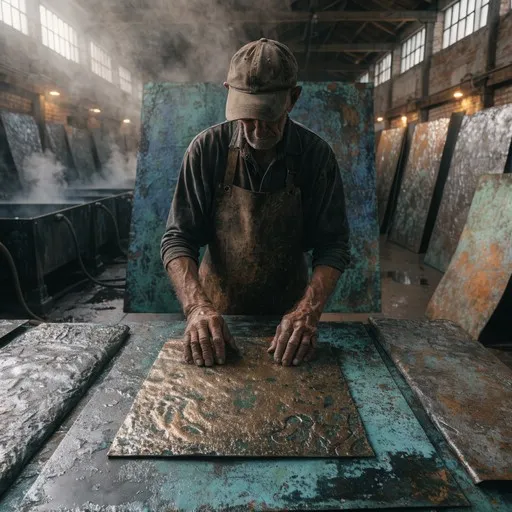
What it means: The green — verdigris, properly speaking — is copper's long-term protective coat. It's why copper roofs on churches and courthouses last a century or more. The patina isn't decay; it's armor.
Month 12: Settled (Winter)
By the anniversary, the downspout had found its look: deep green along the damp lower runs, weathered brown up top, all of it matte and soft-edged. It looked like it had been there for twenty years. In the best possible way.
What Your Patina Color Is Telling You
The speed and shade of the change is basically a free environmental report:
- Fast green means lots of moisture — rain, humidity, sprinkler overspray.
- Slow, stubborn brown suggests dry air or a sheltered spot under an eave.
- Dark, blotchy, almost black patches can indicate industrial or traffic pollution — sulfur compounds in the air accelerate tarnishing.
- Streaking usually means water is running over the copper from something upstream, like treated lumber or certain roof shingles, and worth investigating.
How to Control the Process
Want to keep the shine? Or hurry the green along? Both are doable.
To keep it bright: Coat it. A clear lacquer or microcrystalline wax applied to clean, dry copper will hold the new-penny look for a few years before needing a refresh. Expect maintenance — that's the price of shine.
To speed up the patina: Mist it regularly with a mix of water and a little white vinegar, or just let nature work — a soaker hose aimed at the piece on dry weeks will do in months what weather does in years. There are also commercial patina solutions if you're impatient.
To even it out: Most people fight the splotchy phase, but my advice is don't. The unevenness is the record of every storm that hit it. Uniform patina comes with time; forcing it with chemicals tends to look like, well, forcing it.
The Takeaway
A copper downspout is one of the few parts of a house that gets more interesting every year you ignore it. Give it twelve months and it'll give you back a running diary of your local weather, written in color. All you have to do is let the rain do the writing.