The Hammer That Will Outlive Us Both: Notes on Tools, Memory, and Making Things That Last
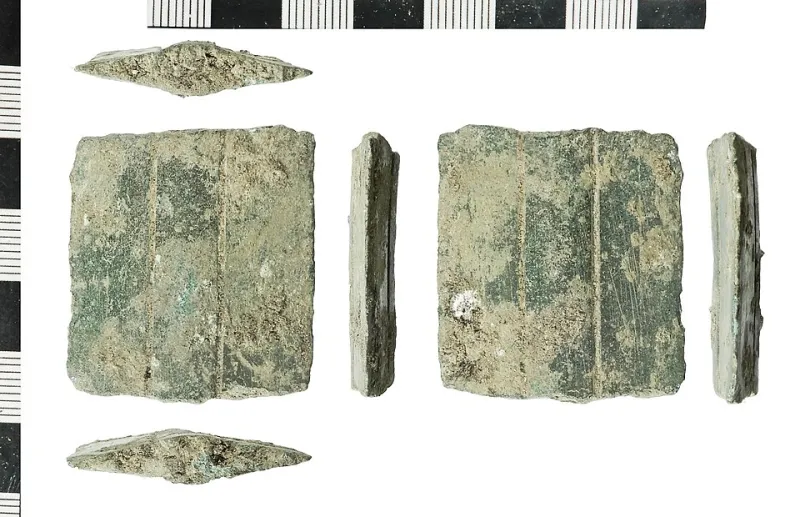
Photo: North Lincolnshire Museum, Martin Foreman, 2020-09-30 15:19:14, CC BY 2.0, via Wikimedia Commons
There's a wooden toolbox on a shelf in my shop that weighs more than my dog. It was my grandfather's, and inside it live the tools that taught me this trade before I ever knew I'd be learning it: a raising hammer with a face worn smooth as a river stone, a set of stakes wrapped in old shop rags, a mandrel my mother swears he used to beat copper kettles in a garage outside Dayton, Ohio.
I never met the man. He died before I was born. But I've spent more hours holding his hammer than I've spent holding most things I own.
A Tool Is a Biography You Can Hold
People come into the shop and pick up a finished pot and ask about the copper. Where's it from, how thick, will it patina. Fair questions. But almost nobody asks about the hammer that shaped it, and that's the question I wish they'd ask — because the hammer is where the story actually lives.
Look closely at a well-used raising hammer and you can read it like a diary. The face tells you the angle its owner favored. The handle tells you the size of his grip and whether he sweated through summer work or wore gloves in a Ohio winter. The dings along the shaft tell you about the day things went wrong. My grandfather's hammer has a deep gouge near the head, and I've invented a dozen stories about it. Maybe none are true. It doesn't matter. The tool remembers something.
That's what separates a tool from an object. A tool accumulates. It takes on the shape of the hands that used it, and when those hands are gone, it keeps the shape anyway.
The Slowest Machine in the Shop
Here's the thing that gets me about these old hammers: nobody designed them to be replaced. There's no upgrade cycle. There's no version two. A good cross-peen hammer forged from decent steel, with a hickory handle you can swap in twenty minutes, will outlast its buyer, that buyer's kids, and probably a grandkid or two.
Compare that to basically everything else in an American garage. The cordless drill that dies when the battery does. The "premium" nonstick pan headed for the landfill in four years. We've built an entire economy on the assumption that the things we buy are on their way out the door from the moment we bring them home.
A coppersmith's hammer is the opposite proposition. It's an object built on the assumption that someone will still want it working after you're gone. That's not nostalgia. That's a design philosophy — and honestly, it's a quiet act of defiance.
Selling Things Nobody Needs (Until They Do)
I joke sometimes that I sell tools nobody needs. Nobody in 2025 needs a hand-hammered copper pot. You can get a machine-spun one for a third of the price, and it'll boil water just fine.
But then I think about the toolbox on my shelf, and I revise the joke. What I'm actually selling is the chance to own something with a biography that's only just beginning. The pot you buy from me today will carry the hammer marks of my afternoon. Twenty years from now, those marks will have softened under your hands and your scrubbing and your Sunday gravy. Fifty years from now, your kid will look at that pot and see your kitchen, not mine.
That's the inheritance, and it passes right through the metal. My grandfather's hammer made pots I'll never see. My hammers will make pots that sit on stoves in houses I'll never visit. The tool is the bridge between all of it.
What This Means for Your Kitchen
I'm not going to tell you to run out and buy a coppersmith's hammer — though if you ever get the chance to take a metalsmithing class, do it. What I'd suggest is simpler: take one look around your kitchen and ask which things there are built to be inherited.
Most of the answer will be embarrassing. Mine was, when I first asked. A cast iron skillet from my wife's grandmother, maybe. A cutting board a friend made. Not much else.
The good news is that this can change, one purchase at a time. Buy fewer things. Buy the ones with the possibility of a biography. Ask the maker questions — who made this, how, with what tools. If the answer involves a person and a hammer and a bench somewhere in America, you're probably on the right track.
The Long Game
My grandfather probably never thought much about the fact that his grandson would one day make a living holding his hammer. He was a workingman. He bought good tools because good tools were the sensible buy, and he took care of them because replacing them cost money.
Somewhere in that plain practicality is the whole argument. You don't have to be a romantic to buy things that last. You just have to notice that the cheap version keeps costing you, over and over, in money and in meaning.
The hammer on my shelf will outlive me. So will the pots leaving my shop this week. I find that thought steadying, somehow — like planting a tree you'll never sit under. Some things are worth doing for the person you'll never meet.