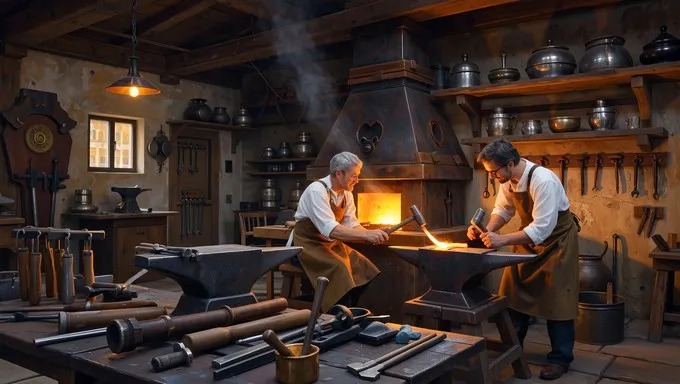
Paddle Up: A Day in the Bidding Wars at the Amish Auction's Copper Table
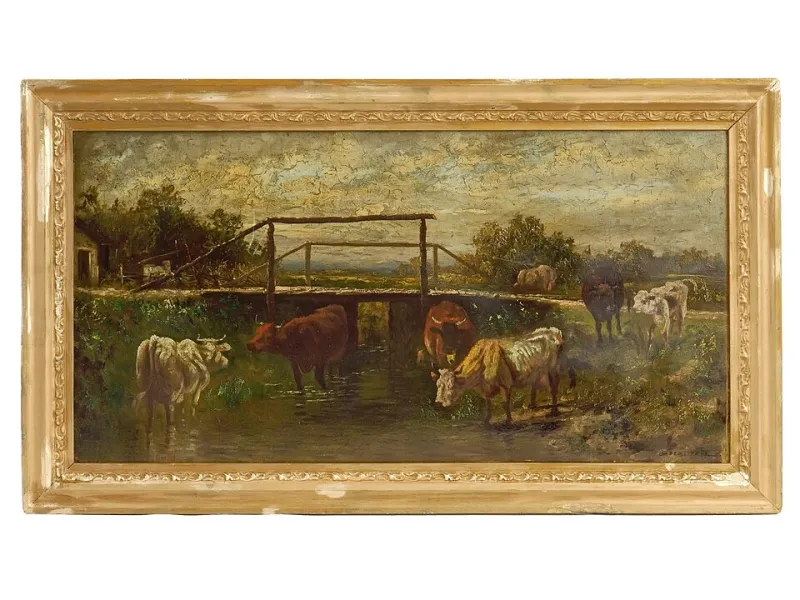
Photo: Ogden Wood, Public domain, via Wikimedia Commons
I've spent enough Saturdays at craft fairs to think I'd seen every kind of copper buyer there was. Then a friend of mine — a guy who restores barns over near Berlin, Ohio — called and told me the spring auction at the sale barn had "a real nice run of copper this year." I figured I'd drive over, watch a few lots cross the block, maybe network a little.
I did not expect to stay until the parking lot emptied out.
The Sale Barn Is Its Own Country
If you've never been to a rural Midwest auction, picture a cross between a county fair and a courtroom. Long rows of folding chairs. A clerk with a laptop balanced on a card table. A bidder number written on a manila envelope. The auctioneer runs the whole room at a cadence that takes about ten minutes to decode and then never leaves your head.
The copper came up mid-morning, after the hand tools and before the quilts. And I mean that literally — there was a table of maybe forty pieces: kettles with rolled rims, a couple of long-handled dippers, a stack of measuring cups, one enormous preserving kettle that had clearly fed a family through forty summers of tomatoes.
What surprised me was who showed up for it. The room divided itself, almost comically, into tribes.
The Three Tribes of the Copper Table
The collectors sat up front. They knew exactly which lots they wanted and didn't waste a paddle raise on anything else. One woman next to me had a notebook with maker's marks sketched in pencil — actual sketches, with dates. When a French kettle came up with a legible stamp, she didn't even hesitate. She told me later she'd been hunting that particular mark for three years.
The chefs were easy to spot because they never sat down. Two of them — a restaurant owner from Columbus and a caterer working the Cleveland wedding circuit — were there for workhorse pieces, not museum pieces. They wanted heavy, thick-walled, tin-lined if possible. Dents and dings didn't bother them a bit. "That's just the pan telling you it's been used," the caterer said, which is honestly a line I might steal for my own booth.
The resellers hovered in the back with phones out, checking sold listings in real time. Nothing wrong with them — they keep the market honest, in a way — but they bid differently. Fast, calculated, and they walk away the second the math stops working. One of them picked up a gorgeous hand-forged ladle for twenty-five dollars, looked at his phone, and shrugged like he'd lost money at twenty-five dollars. Maybe he had. Maybe that's the whole game.
What I Learned About Spotting the Real Thing
Watching all three groups work the same table taught me more in four hours than a season of craft fairs. A few field notes:
- Weight before looks. Every experienced buyer in that room picked pieces up first thing. Old copperwork is heavier than it looks. Thin, featherlight "antique" pots are usually modern imports with a fake patina.
- Rivets tell the truth. Hand-set rivets are slightly irregular, hammered flat from the inside. Perfectly uniform rivets are a machine's signature.
- Seams matter. Older vessels were often raised or seamed by hand — look for a slightly wobbly line. A flawless, laser-straight seam screams factory.
- The patina shouldn't come off on your thumb. Real age sits in the metal. Painted-on "antique finish" wipes away like chalk.
Auction Etiquette, the Unwritten Version
Nobody hands you a rulebook at the door, so here's what the regulars taught me:
Inspect before the lot comes up, not during. Touching pieces while bidding is live gets you the stink eye from the entire front row. Set your ceiling before the auctioneer starts the chant — the number one way people overpay is deciding their limit mid-bid. And when you win, settle up and clear out your haul promptly. In a small sale barn, the volunteers running the checkout are also your neighbors.
One more thing: tip your hat to the Amish families selling. A lot of this copper came out of their kitchens and workshops, and it was cared for the way we craftsmen wish everything got cared for.
Why Small-Town Auctions Are the Last Frontier
Here's my honest take after Saturday: the big antique shows and online marketplaces have been picked clean. Anything genuinely old and genuinely good gets listed online within an hour of being found, priced accordingly.
But a sale barn in the middle of Ohio Amish country? Nobody's photographed that stack of kettles for an eBay listing. The pieces come out of attics and barns and estate sales in bulk, get lumped onto one table, and sell to whoever's paying attention that morning. I watched a hand-raised whiskey still cap — the kind of thing I'd pay real money for — go for less than a pizza dinner because the two people who recognized it were busy bidding against each other on a kettle across the aisle.
If you love old-world copperwork, find your regional auction. Get a bidder number. Bring cash, bring patience, and bring a notebook for the maker's marks.
And if you see a bearded guy in a copper-stained apron hovering near the kettles — come say hello. I'll probably lose the bidding war anyway.