Eighty Feet Up with a Hammer: When a Congregation Calls the Metalsmith First
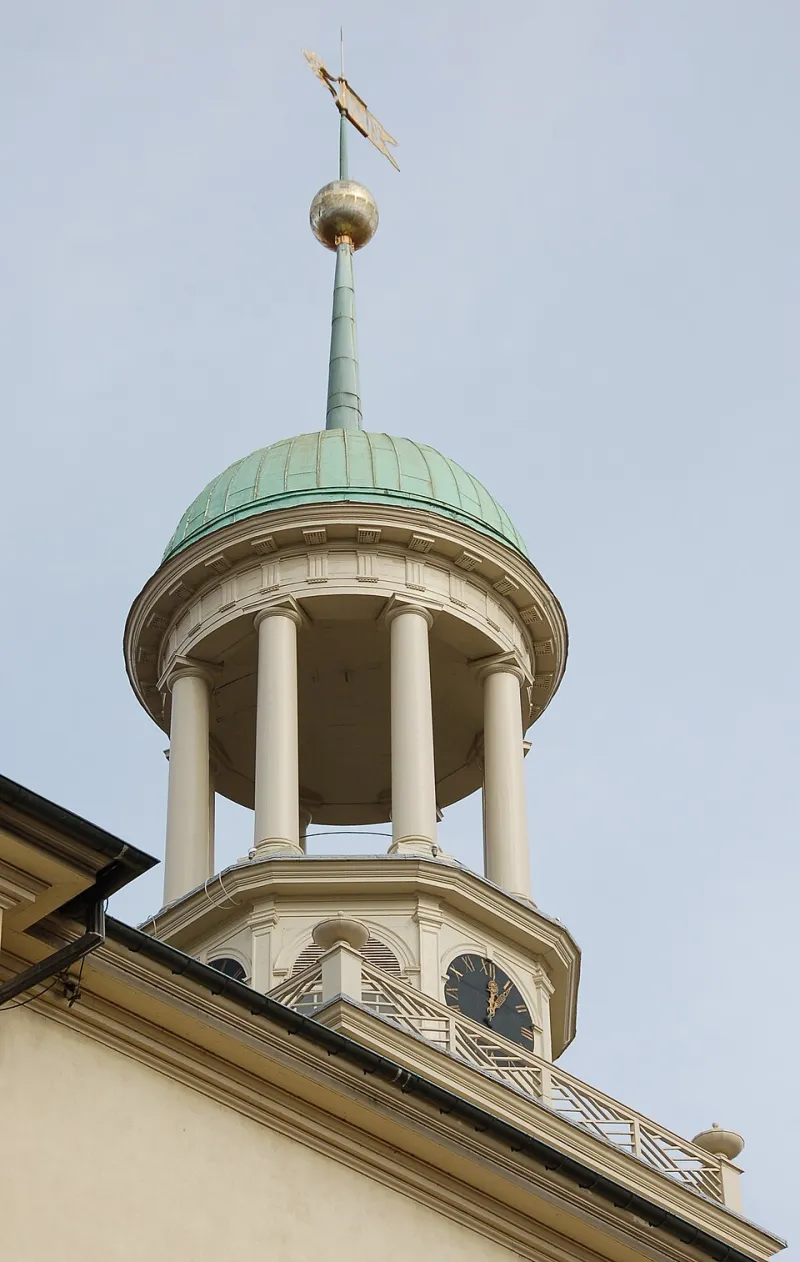
Photo: Photo by and (c)2008 Derek Ramsey (Ram-Man), GFDL 1.2, via Wikimedia Commons
The phone call usually starts the same way. "We've been told you're the only one who'll touch it."
It's a pastor, a church trustee, or a member of the building committee — somebody who's spent the last six months getting bids and hearing the same answer over and over. The roofer won't do it. The sheet metal shop won't do it. The general contractor quoted a number that made the deacons faint. So eventually somebody's cousin mentions the metalsmith two towns over who fixed the cupola on the old courthouse, and the phone rings on my bench.
I've come to understand why. Church copper work isn't really a roofing job. It's a craft problem wrapped in a logistics problem wrapped in a hundred years of congregational memory. And most tradespeople, sensibly, want no part of it.
Why the Steeple Isn't a Roofing Job
A church roof is mostly straightforward: slopes, valleys, gutters. The steeple is something else entirely. It's a tapered, often octagonal tower of curved panels, custom-bent flashing, and details that were fabricated by hand sometime between 1870 and 1920 — back when every town of any size had a coppersmith and nobody thought twice about bending sheet metal into a spire on a Tuesday.
Those original panels aren't standard. They're not in any catalog. If the roofer up there finds a split seam or a wind-torn section, he can't order a replacement. It has to be made — measured, patterned, formed, and fitted to curves that haven't been straight in a century. That's metalsmithing, full stop. And the number of people in this country who still do it by hand is small enough that you could fit most of us in one church basement, which is fitting, because that's usually where the meeting happens.
The Patina Problem
Here's the part nobody thinks about until they're standing in the parking lot squinting up: the color.
New copper is bright. Penny-shiny, almost orange. A steeple that's weathered a hundred Kansas winters or a century of New England nor'easters is a soft, matte green-gray that took four generations to develop. Slap new copper next to it and the whole building looks like it's wearing one old shoe and one new sneaker.
So matching the patina becomes half the job. There are chemical patination treatments that accelerate the weathering process — and they work, to a degree. But the honest method is patience and placement. Sometimes we save and reuse every salvageable inch of old copper, patching with the original material so the repair disappears. Sometimes we install new metal and let time do its work, warning the congregation that for a few years the steeple will look like a patchwork quilt. Most folks, once they understand what they're looking at, would rather wait on the weather than fake the finish.
Working at 80 Feet with Everything You Need in a Bucket
The logistics of steeple work would be funny if they weren't so nerve-wracking. You can't exactly carry a forming bench up a scaffold. Everything — every tool, every panel, every rivet — goes up in a hoist or a bucket line, and once you're up there, you'd better not have forgotten the #9 tinners snips.
Scaffolding around a church steeple is its own engineering project. It has to clear the roof, brace against wind, and often go up over a graveyard, which adds a whole category of permissions and sensitivities. And then there's the audience. A congregation treats its steeple like a family member. People will drive past the site daily. The church ladies will bring you coffee in a thermos via a rope-and-bucket arrangement that's been running since before OSHA. Somebody's grandfather laid that original copper in 1911, and half the congregation can tell you his name.
You feel that up there. Every hammer blow echoes off the sanctuary roof. You're not just fixing metal — you're touching the most visible symbol a community has. The steeple is what people look for when they give directions. "Turn left at the church with the green spire." You're repairing a landmark.
What the Job Actually Looks Like
A typical church call breaks down into a few recurring problems:
- Split seams and open joints where expansion over a century has worked the solder loose. These get re-seated, re-soldered, and re-sealed the old way.
- Wind damage, usually on the windward face — one storm can peel back a section of standing seam like a sardine lid.
- Failed flashing where the copper meets slate or shingle, which is where most leaks actually start. The steeple gets blamed; the flashing did it.
- Lightning and finial damage. The little ornaments at the very top take the hits, literally, and they're almost always custom fabrication jobs.
- Pigeon and squirrel collateral, which is more destructive than people want to believe.
None of it is complicated in principle. All of it is complicated at 80 feet, in the wind, with materials you often have to form on the ground and haul up in one piece.
Why I Keep Saying Yes
There are easier ways to make a living. But when the job is done and the scaffold comes down, and on the first Sunday the whole town notices that the steeple is whole again — there's nothing like it. I've had congregations sing a hymn about it. I've had a 90-year-old woman take my hand and tell me her father hammered that very copper. You don't get that from a shingle job.
So yes, churches keep calling the metalsmith before the roofer. Not because we're better than roofers — we're not, and a good roofer is worth their weight in copper scrap. We get the call because the steeple was never just a roof. It's a handcrafted thing, made by somebody's hands, holding up a community's sense of place. And handcrafted things deserve handcrafted repairs.
If your church has copper up top that's showing its age, here's my advice: get it looked at before it leaks, not after. Copper fails slowly and then suddenly. And when you call somebody, ask whether they form their own panels. The answer tells you everything you need to know.