Ask Me About the Still: The Questions I Get Every Weekend (and the Law Behind Them)
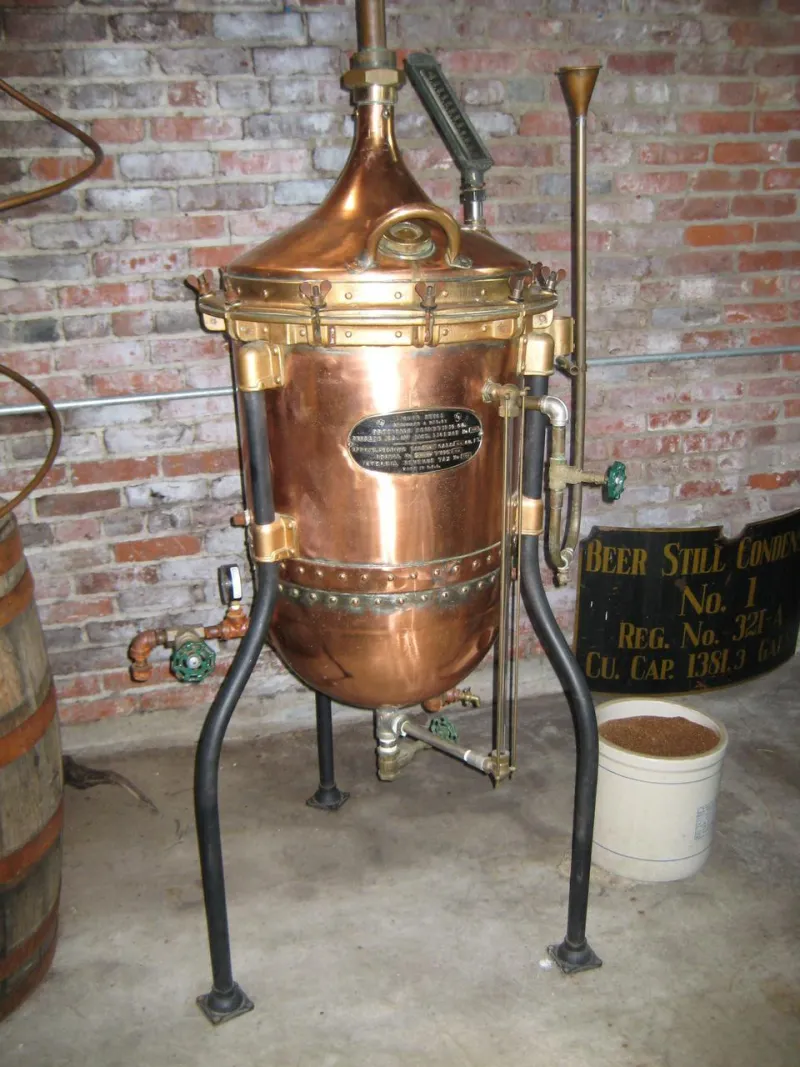
Photo: Steve Ryan from Groveland, CA, USA, upload by Herrick 11:55, 4 September 2007 (UTC), CC BY-SA 2.0, via Wikimedia Commons
There's a moment that happens at nearly every show I set up at. Somebody picks up a copper still head I've got on display, turns it over in their hands, glances left and right like we're trading baseball cards, and asks, "So... what can you actually do with this?"
I used to give the short answer. Then I realized the short answer was leaving people with half-truths they'd picked up from forums and a guy at work named Dale. So here's the long version—the one I'd tell you if we had a folding chair and an hour between customers.
The Federal Rule Is Simpler Than the Internet Thinks
Let's start with the part that surprises people most: owning a still is federally legal in the United States. You can buy one, build one, display one on your mantel if that's your thing. The feds don't care about the equipment.
They care about what comes out of it.
Under federal law (26 U.S. Code, if you want to look it up), distilling spirits—meaning anything with alcohol in it—requires a federal permit, even if you're making a single bottle for yourself and never selling a drop. That's the part people get wrong. The common myth is "under 100 gallons is fine" or "as long as you don't sell it." Neither is true at the federal level. Home distilling of alcohol without a permit is illegal, full stop.
But here's the flip side: distilling water, essential oils, or non-alcohol distillates? Completely legal federally. Nobody needs a permit to purify stream water or pull hydrosol out of lavender.
Now the State Layer, Which Is Where It Gets Messy
Federal law is the floor. States build their own rules on top, and they don't agree with each other.
A handful of states have passed laws permitting legal home distilling of spirits for personal use—places like Missouri, Michigan, and a few others have provisions on the books. Even in those states, though, the federal requirement still applies, which creates a strange situation: your state says it's fine, the feds say you need a permit, and the practical answer for most hobbyists is that alcohol distillation at home remains out of reach unless you go through the federal permitting process.
Other states take the opposite approach and explicitly prohibit it regardless of quantity. And a few are simply silent, which lawyers will tell you is not the same as permission.
My standing advice at the booth: check your own state's current statutes, not a forum post from 2016. Laws change. I'm a coppersmith, not your attorney, and the guy on the internet with the still built from a beer keg is not your attorney either.
What That Copper Pot Is Legal For Right Now
Here's the good news. A handcrafted copper still is a genuinely useful piece of equipment even if you never touch a drop of whiskey:
- Water purification. Distilled water is the purest form you can make at home, and copper's thermal conductivity is exactly why old-time stills were copper in the first place—it heats evenly and cleans up easily.
- Essential oils and hydrosols. If you grow lavender, peppermint, or eucalyptus, steam distilling your own oils is legal, satisfying, and produces a better product than most store shelves.
- Vinegar and fermentation projects. Fermenting is federally legal in all 50 states (up to 100 gallons per adult per household), and a copper vessel plays nicely with certain traditional ferments.
- Maple syrup and sap concentration. Copper evaporator pans are the traditional tool for a reason.
That's why I tell customers the still head I sell is first and foremost a water and botanical still. Because that's what it is, in the eyes of the law and in the hands of most of the people buying it.
Why Copper Anyway?
This is the part I actually know cold. Copper reacts with sulfur compounds produced during distillation and fermentation, binding them and pulling them out of the final product. That's chemistry, not folklore—it's why every serious commercial distillery on the planet lines its stills with copper. Stainless steel is easier to clean and cheaper to build, but it doesn't do that job.
Copper also heats and cools faster than almost any metal you can put on a stove, which means more control, faster adjustments, and a longer-working piece of equipment.
The Bottom Line I Give at Every Show
Own the equipment: legal. Distill water, oils, and botanicals: legal. Distill alcohol at home without federal permission: not legal, in any state, in any quantity, no matter what Dale says.
I got into this trade because copper holds a story, and part of that story includes some colorful American history I've written about before. But history is history and law is law. The best way to honor the old craft is to work it honestly—make something pure, make it well, and keep making it for years.
If you've got questions about what a still can do for your garden, your pantry, or your emergency kit, come find me at the next fair. No need to lower your voice. It's not that kind of booth.