After the Forge Goes Cold: Where a Metalsmith's Life's Work Actually Ends Up
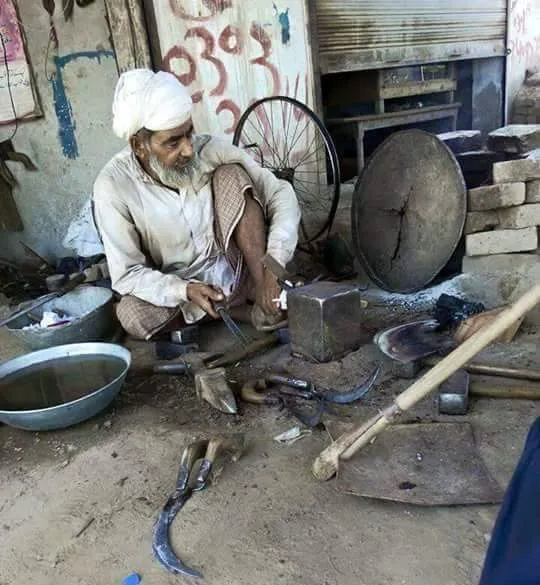
Photo: Sohailmuzafar, CC BY-SA 4.0, via Wikimedia Commons
There's a particular kind of silence in a workshop after the last person who understood it is gone. I've stood in three of them now — one in western Pennsylvania, one outside Asheville, one in a barn in rural Missouri — and each time, the feeling is the same. The hammers are still on the rack. The raising stakes are lined up on the wall like soldiers waiting for orders that will never come.
Estate liquidators call these "tool sales." Collectors call them opportunities. I've started calling them something else: the second-most important day in a workshop's life. Because what happens in the seventy-two hours after a copper shop closes its doors determines whether a lifetime of knowledge leaves behind anything at all.
The Auction Block Doesn't Care About Provenance
Talk to anyone who buys out retiring craftspeople and you'll hear the same story. The family knows dad's tools were important — they just don't know to whom, or for how much. So they call a general estate sale company, and the man who spent forty years raising copper vessels by hand gets his life's kit sold off in lots between a riding mower and a box of Christmas ornaments.
Maggie Truitt, an estate buyer who specializes in craft workshops, put it to me bluntly over coffee in Lancaster County: "A signed Dirk van Erp hammer goes for real money. But a no-name raising hammer with sixty years of wear? To the auctioneer, that's five dollars. To the right person, it's a document. The wear pattern alone tells you how that smith held the work, how they moved. Most buyers never see it."
The really painful losses are the ones nobody photographs. Paper patterns traced on butcher paper and grocery sacks. Commission ledgers with client names going back decades. Test pieces — the little hammered discs where an apprentice proved they were ready. When the family clears out, those go in the dumpster first, because they look like trash.
What the Museums Can Take (and What They Can't)
I called a decorative arts archivist at a midwestern museum — she asked me not to use her institution's name because she gets these calls weekly — and she explained the math nobody wants to hear.
"People assume we want everything," she said. "We have maybe forty linear feet of storage for regional craft. A full workshop? We can take the bench, maybe the signature tools, and the paper archive. The four hundred pounds of scrap copper and the duplicates? That's somebody else's problem."
Her advice: museums move on relationships, not cold calls. If a metalsmith is still living, the single most valuable thing they can do is name a person — a student, a collector, even a neighboring shop — who will speak for the collection when the time comes. Without an advocate, the archive becomes a garage sale.
The Half-Finished Commissions Are the Hard Part
Here's what keeps me up at night. In one of those three shops, there was a copper range hood, hammered and planished, about eighty percent done. The customer had paid a deposit. The smith died before final shaping.
Legally, that deposit usually becomes part of the estate, and the family refunds it or keeps it — end of story. Practically, a piece like that is a riddle. Can another smith finish another maker's work? Some say yes, that completing a commission honors the dead. Others, including me, say you can't finish someone's hammer marks. You can only make something next to them.
Most often, those pieces get sold as-is, labeled "unfinished by [name]," and honestly? Those sometimes become the most treasured objects in a collection. You can see exactly where the hand stopped.
If You Find Yourself at One of These Sales
A short field guide, from what I've learned the hard way:
Photograph everything before you buy anything. The layout of a bench, the wall of stakes, the chalkboard notes — that context is the part that vanishes first and matters most later.
Ask for the paper. Patterns, order books, supply invoices, correspondence. Even a 1987 receipt from a copper supplier in Reading, Pennsylvania, tells a story about where the material came from.
Learn the difference between wear and damage. A hammer face polished mirror-smooth from decades of use is better, not worse. Dents in a raising stake's horn are character. Rust is just rust.
Buy the small stuff too. The disc cutters, the solder snips, the little brass mallet. These are the first things liquidators lump into a "misc tools" box, and they're often the most usable pieces for a working smith.
And if you know the maker's name, write it down and attach it to the object. A tag with tape and pencil beats a mystery every single time.
The Legacy Question
I'll admit this piece is partly self-interest. Someday there will be a sale at my shop, and I'd rather it be a handoff than a clearance. I've started labeling my own tools, keeping my pattern files in one drawer instead of five, and writing down which pieces I'd want sent to which people.
Copper doesn't die. It's been recycled for ten thousand years — melted down and raised again. But the hand that shaped it, the specific person and their specific way of moving metal? That only survives if somebody bothers to write it down.
So the next time you see an estate sale listing that mentions "metalworking equipment" in a rural zip code, go. Bring cash, bring a camera, and bring questions. Somewhere in that barn is a lifetime, priced at five dollars a lot, waiting for someone who recognizes it.