When the Burner Is a Magnet: A 2026 Guide to Copper on Induction

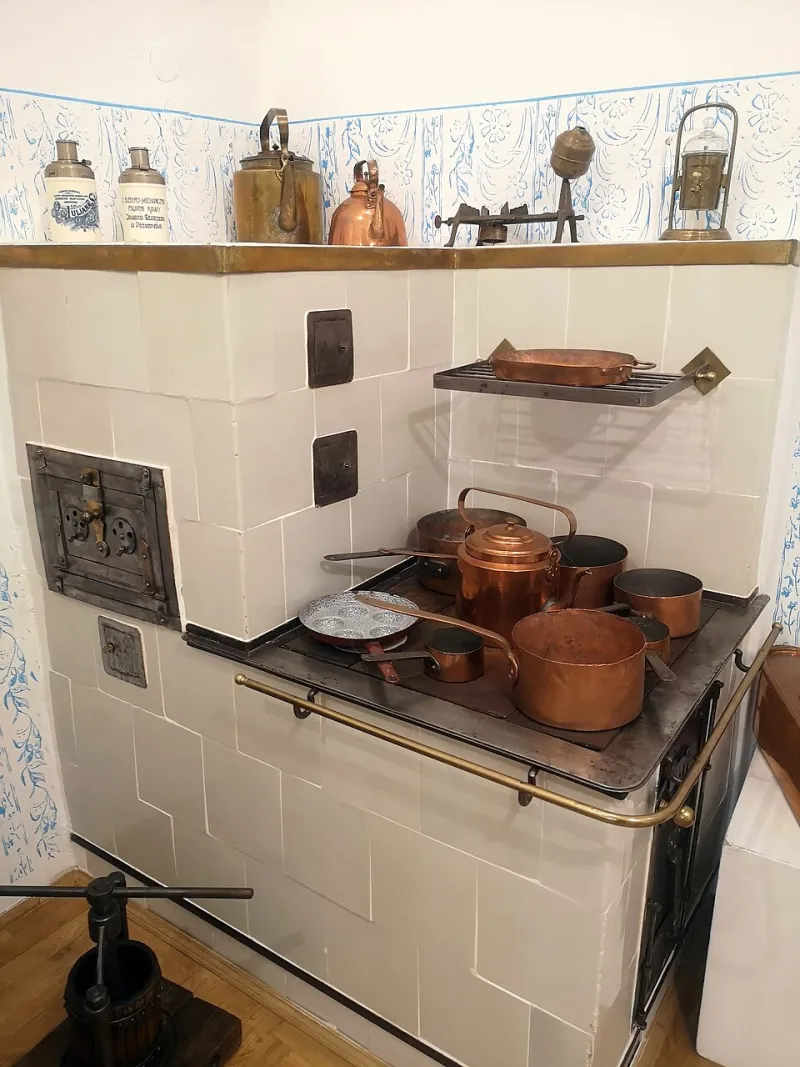
Photo: Mona Hassan Abo-Abda, CC BY-SA 4.0, via Wikimedia Commons
Induction cooking has moved well past the early-adopter phase. In 2026, plenty of American kitchens are being planned around a smooth glass top and a magnetic field instead of a gas flame. I hear from more copper owners every month who love their pots and hate the moment they set one on the new range and nothing happens.
The short answer is simple: copper is not magnetic. Induction burners do not care how beautiful the pot is, how thick the walls are, or how many hours went into the hammer marks. They care whether the base can be energized by a magnetic field. A copper-only pot cannot. That is not a defect. It is physics.
Start with the magnet, not the brochure
Before you fall in love with a piece, take the refrigerator magnet off the door and touch it to the base. If it sticks hard, you have a ferromagnetic layer somewhere in the construction. If it slides off, the pan is copper through and through, and it will not work on induction without help.
This test matters because listings can be fuzzy. A pan described as copper cookware may be solid copper, copper-clad, copper-colored, or copper exterior with a stainless interior. Only the ones with a magnetic layer in the base will trip an induction burner. The magnet does not read marketing copy.
Three legitimate ways copper meets a magnetic burner
The first is a bonded induction base. The pot is still copper on the outside, but the bottom carries a layer of magnetic stainless steel or another ferrous material. This is the cleanest solution for daily cooking. The base is part of the pan, so there is no loose disk to slide around, scratch the glass, or lose in a drawer.
The second is an induction adapter disk. You put the disk on the burner, set the copper pot on top, and the disk translates the magnetic field into heat. It works. It is also a compromise. You are heating through an extra layer, so response slows down and the burner may cycle differently. Some disks scratch glass tops. Some trap heat in ways that make the pan feel less like copper and more like a covered skillet.
The third is to buy copper that was designed for induction from the start. That usually means a copper body with a bonded base and a stainless cooking surface. You give up the pure tin or bare copper interior, but you gain a pan that behaves predictably on a magnetic range.
Which pieces work out of the box
At my bench, the pieces that work out of the box are the ones explicitly built with an induction interface. Those are not traditional copper-only pots. They are copper pots with a magnetic base engineered into the bottom. If a piece is described only as hand-raised copper, plan on gas, electric coil, or an adapter disk.
That distinction should be on the listing, but it is not always. Ask. A maker who builds induction-ready copper knows exactly which layer is doing the magnetic work and how it is attached. A maker who has never tested a pan on induction may still sell you one and wish you luck.
Flat bottoms, honest heat, and the warping question
Induction is fussy about contact. The magnetic field wants a flat base sitting close to the glass. A hand-hammered copper pot can have a beautiful, slightly irregular bottom and still be a poor induction candidate if it rocks or sits high.
This does not mean every handmade pot needs a machined-flat bottom. It means the induction-ready ones do. If you are buying for a magnetic range, ask how flat the base is and whether the maker has tested it on a real induction cooktop, not just a laboratory hot plate.
Heat matters too. Copper moves heat quickly, but an induction base can concentrate energy in a smaller ring than you expect. Match the pan to the burner size. Do not preheat an empty pan on high. Do not slide a hot pan across glass. Those habits are hard on any cookware and especially hard on a bonded base.
What to ask before you buy
- Is the base magnetic? Will a magnet stick to it?
- Is the induction layer bonded and encapsulated, or is it a separate disk?
- What is the base diameter, and how does it compare with my burner ring?
- Has the pan been tested on induction, and at what power level?
- What is the flatness tolerance for the base?
- Is there a warranty on the base attachment?
- Can the pan go in the oven, and at what temperature?
- Does using an adapter disk affect the warranty?
- How much does the pan weigh compared with a copper-only version?
The responsiveness trade-off
Copper's reputation comes from speed. It heats fast, cools fast, and gives you a level of control that thick aluminum and cast iron cannot match. A bonded induction base adds mass, and an adapter disk adds a gap. You still get a responsive pan, but not the same response as copper on gas.
That is not a reason to give up. It is a reason to be honest about how you cook. If you are making delicate sauces and you live on induction, a well-built bonded-base copper pan is still a pleasure. If you are boiling stock and searing steaks, the difference is smaller than the internet suggests. Buy the pan that fits the range you actually own.
Care on a glass top
Treat the glass like glass. Lift the pan instead of sliding it. Keep the base clean, because grit between the pan and the cooktop is how scratches happen. Dry the base thoroughly after washing. If the magnetic layer discolors, that is usually cosmetic, but ask the maker before you attack it with abrasives.
And do not assume dishwasher-safe just because the pan is metal. Many handmade copper pieces are hand-wash only, induction base or not. The base is not the only part that cares.
The bottom line
Induction and copper can live together. They just need a translator. If you are shopping in 2026, carry a magnet, ask what is in the base, and do not let a beautiful hammered surface distract you from the one question that matters: will this pan actually heat on my stove? Get that answer first, and the rest of the cooking gets a lot easier.