150 Years Underwater and Still Holding: What Great Lakes Wrecks Teach Us About Copper
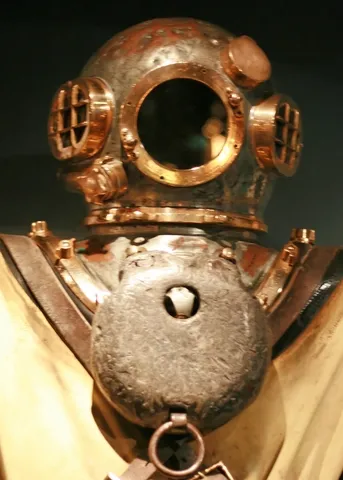
Photo: Madison Berndt, CC BY 2.0, via Wikimedia Commons
Somewhere at the bottom of Lake Huron, there's a wooden schooner that went down in the 1860s, and if you dove it tomorrow, you'd find its copper fasteners right where the shipwright left them — bright enough under a dive light to look almost new.
This is the part of copper's story that never makes it onto a product page: the metal's real résumé isn't in kitchens. It's in shipwrecks.
The Wreck Diver's Rule
Talk to Great Lakes divers and you'll hear the same observation repeated like folklore: iron dissolves, wood turns to mush in the invasive quagga mussels' wake, rope and canvas vanish within decades — and copper rigging, sheathing strips, and hull fasteners stay put. The freshwater is cold and low-oxygen, which helps, but the divers who've pulled up century-and-a-half-old copper sheathing from Lake Michigan wrecks will tell you the metal itself is doing most of the work.
Copper in water develops a thin protective patina — the same chemistry that turns a courthouse dome green — and that film slows further corrosion to a crawl. Meanwhile, the same water eats through iron fasteners in a few decades. On 19th-century ships, that meant copper-fastened hulls simply outlasted their iron-fastened sisters. There are recorded cases of wooden vessels being scrapped not because the hull failed but because everything around the copper gave up.
Why This Matters in Your Kitchen and On Your Roof
I'm not in the shipbuilding business, but the same physics shows up at my bench every week.
When someone asks me whether a copper gutter or a copper roof is worth the premium, I don't tell them a story about patina. I tell them about the schooners. The question behind every one of those purchases is the same question a shipwright asked in 1850: do you want this to outlast you, or don't you?
That's why boat restorers still call. A client rebuilding a wooden runabout on Lake Geneva ordered copper rivets and a rubbing strake from me last fall — not because a hardware store couldn't ship bronze, but because he wanted the boat to be fixable by his grandkids. Copper doesn't corrode into the surrounding wood the way galvanized fasteners do. In fifty years, someone will be able to take the boat apart and put it back together.
The Trade-Off Nobody Puts on the Label
I'll be straight with you, because I sell the stuff: copper's longevity isn't free.
- It's soft. It dents. A copper hull sheathing could be repaired with a mallet at sea — that was the point — but it also shows every hailstone and ladder scrape.
- It's expensive up front. The math only works over decades, not seasons.
- It's a commitment. A copper roof will likely be on the house longer than you own the house, which is either the best argument for it or the worst, depending on how you feel about permanence.
What the Lakebeds Are Really Saying
There's something a little sobering about the fact that the most honest long-term product review copper has ever received is sitting at the bottom of the Great Lakes, holding dead ships together, waiting for divers to come read it.
Every artisan working today is guessing about longevity. The divers aren't guessing. They've seen the results, measured in centuries. When you choose copper for something — a pot, a downspout, a boat — you're placing the same bet those shipwrights did. The lakebed suggests they bet well.